
Hyundai Reviews
- Hyundai Genesis
- Accent SR Hatch
- Hyundai i30 SR
- Hyundai Elantra SE
- Hyundai Elantra SE
- Hyundai i30 SE
- Sonata Sedan
- Hyundai Tucson Petrol
- Hyundai Elantra 2.0
- Hyundai Tucson Diesel
- Hyundai Elantra SR Turbo
- Hyundai Kona
- 2018 Hyundai i30N
- Hyundai IONIQ Hybrid
- 2019 Hyundai Santa Fe
- 2018 Hyundai i30
- 2018 Hyundai i40 Tourer
- 2018 Hyundai iMax
- 2018 Hyundai Accent Hatch
- 2018 Hyundai Accent Sedan
- 2019 Genesis G70
- 2019 Hyundai Elantra
- 2019 Hyundai IONIQ Electric
- 2019 Hyundai Kona Electric
- 2019 Hyundai Veloster
- 2019 Hyundai KONA Iron Man Edition
- 2020 Hyundai Venue SUV
- 2020 Hyundai Sonata
- 2021 Hyundai Palisade
- 2021 Hyundai i30 Sedan
- 2021 Hyundai Tucson
- 2021 Hyundai Kona N
- 2021 Hyundai Staria
- 2021 Hyundai Sonata N-Line
- 2022 Hyundai i30 Hatch
- 2022 Hyundai i20 N Hatch
- 2022 Hyundai Santa Fe
- 2022 Hyundai Staria Load Van
- 2023 Hyundai Ioniq 5
- 2023 Hyundai Kona
- 2024 Hyundai IONIQ 6
- Hyundai Accent
- New Hyundai iLoad
- 2024 Hyundai i30 Sedan Hybrid
- 2025 Hyundai IONIQ 5
- Hyundai Tucson
- Hyundai Trajet
- Hyundai Tiburon
- Hyundai Terracan
- Hyundai Sonata
- Hyundai Santa Fe
- Hyundai Grandeur
- Hyundai Getz
- Hyundai Elantra
- Hyundai i30 Review
- Hyundai H1
- Hyundai iLoad
- Hyundai i10
- Hyundai i30cw
- Hyundai iMax
- Hyundai i20
- Hyundai iX35
- Hyundai i45
- Hyundai HD Truck
- Hyundai i40
- Hyundai Veloster
- Hyundai Elantra 2012
- Hyundai Accent 2012
- Hyundai i30 2012
- Veloster SR Turbo
- i40 Sedan
- Santa Fe
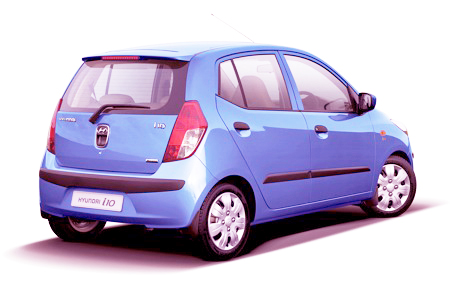
Following up on the success of the i30, Hyundai has now released the i10, another practical, zippy city hatch with plenty of street appeal. Has Hyundai made the right move in introducing another hatch into its lineup? Read on and judge for yourself…
The Hyundai i10 differs from the i30 in that it is a smaller hatch and is likely to appeal to urban professionals, singles and retired people and as a second “shopping basket” car. That being said, it is still a five-seat five-door hatch that would be suitable for smaller, younger families who are interested in economy, safety and reliability.
The Hyundai i10 has punchier looks than its big brother, with stylish body-coloured door handles and bumper, focussed-looking headlights and sporty alloy wheels. Big windows all round give plenty of visibility (and then there’s the sunroof on top of that), and the i10 has a decent tailgate to it. It’s kind of like a pug dog – a lot of go in a little package. The inside has pretty decent leg and head room for such a small car, plus plenty of comfort and convenience features like the heated front seats, the power windows (which includes the sunroof) and some pretty hot sounds through the stereo system, which comes with an auxiliary jack for the input device of your choice – yes, you can use an iPod in an i10.
The Hyundai i10 is a frugal little beast, and this is one of its design features that is likely to appeal in the current recession. The 1.1 litre engine (manual version) manages to squeeze out a pretty good 60 mpg or 4 litres/100 km, and in line with environmental restrictions and concerns, the Hyundai i10 is pretty clean running, producing only 119 g/km of CO2 (1.1 litre manual version again). The Hyundai i10 also comes in a 1.2 litre petrol version and a 1.1 diesel version, all three engines being combined with a five-speed manual, and the petrol variants having a four-speed auto option. Performance-wise, the Hyundai i10 is no racing car in any of its variants, with a top torque of 153 Nm on tap in the CRDi diesel variant at 1900–2750 rpm (which is pretty good, really) along with a top power of 55 kW at 4000 revs. The petrol variants are little behind this in the power and twist stakes, with the 1.1 reaching its maximums at 48.5 kW (5500 rpm) and 99.1 (2800 rpm) and the 1.2 reaching its peak at 57.2 kW (6000 rpm) and 117 Nm (4000).
The Hyundai i10 takes safety seriously and has design features that are designed to protect not just the occupants but also any pedestrians or cyclists that you may inadvertently come in contact with – let’s face it, on busy suburban or urban streets, people do dash out unexpectedly from nowhere, and if a tragedy can be prevented, it should be. The ABS brakes will also do their level best to stop sharply, smoothly and safely, too, and the ESC (electronic safety control) will sense if you’re deviating from where you should be and will rein things in the Hyundai i10 stays firmly where you want it to be. If you ding something, the airbags strategically positioned around the cabin (front and side) will deploy – unless you have used the manual airbag deactivation feature for the front passenger seat, which is vital if you need to put a child safety seat in the front (for example, if you need to fold the rear seats down flat for a large load).
The final verdict? The Hyundai i10 is a reliable, safe, practical and economical car that provides plenty of fun and practicality for those on a lower budget.
The current model series includes the:
- Hyundai i10 (models to be confirmed)
For anymore information on the Hyundai i10, or for that matter any other new car, contact one of our friendly consultants on 1300 303 181. If you’d like some fleet discount pricing (yes even for private buyers!), we can submit vehicle quote requests out to our national network of Hyundai dealers and come back with pricing within 24 hours. Private Fleet – car buying made easy!
Back to Hyundai Car Reviews